
To clean industrial exhaust fans and greasy ductwork, plan the work around three areas: the fan wheel, the housing, and the connected duct sections. Each presents a different problem. Deposits on a fan wheel can affect balance, oily sludge can collect at the bottom of the housing, and a nearby access opening may reveal only part of a duct run.
This guide covers industrial extraction systems with oil or grease deposits. Start with the equipment manuals and the site’s maintenance procedure. Have the site safety team assess the deposits before choosing a cleaning method if the system also handles combustible dust, flammable vapors, or unknown process residues.
Contents
- Isolate the system and map the work area
- Clean the fan wheel and housing
- Clean reachable duct sections
- Match the cleaning equipment to the job
- Inspect the system before handoff and restart
1. Isolate the system and map the work area
Have authorized personnel follow the site’s hazardous energy control procedure and verify isolation before opening the fan housing or starting work. Include connected equipment and stored energy in the assessment. For U.S. workplaces, see OSHA’s control of hazardous energy standard.
Make a simple sketch showing the fan, access openings, horizontal runs, elbows, and low points. From approved access positions, identify where the crew can reach the deposits, collect runoff, and verify the result. If a section requires a different access arrangement, flag it during planning.
2. How to Clean Industrial Exhaust Fans: Wheel and Housing
The wheel and housing need separate checks. On the wheel, inspect both sides of the blades and the areas near the hub where buildup may be hidden from the first viewing angle. Follow the fan manufacturer’s approved method and clean evenly across the wheel. Uneven cleaning can leave the wheel out of balance and cause vibration. See this fan manufacturer’s operation and maintenance manual for an example of wheel maintenance guidance.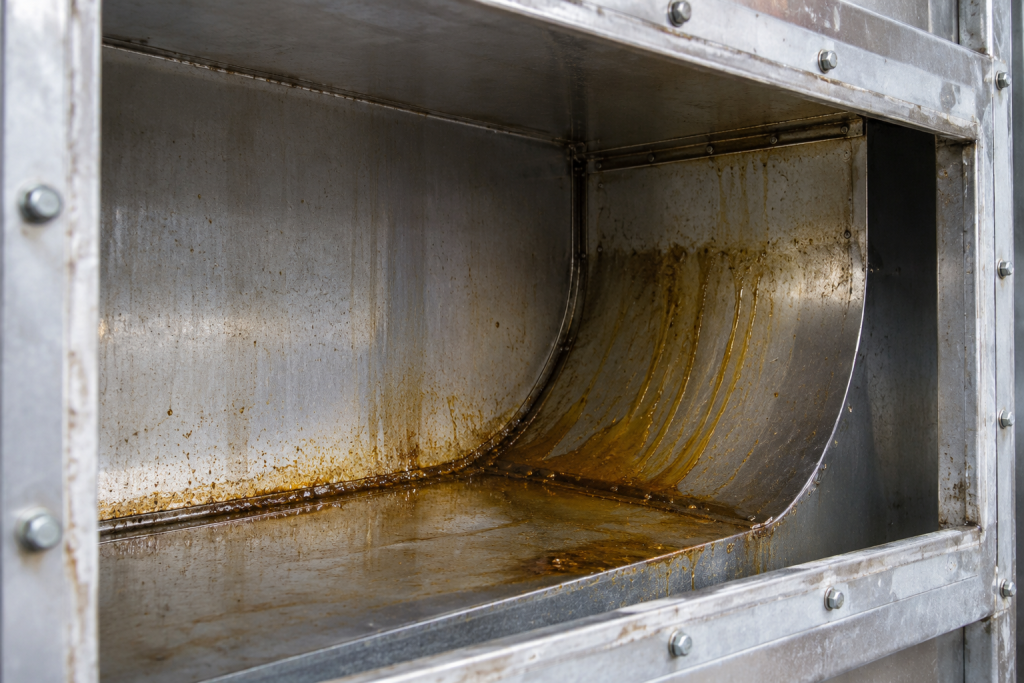
For the housing, inspect the lower corners, seams, and the area around the outlet transition. Collect heavy deposits using the site-approved method before washing. Keep liquid away from motors, bearings, electrical connections, and other areas identified in the manual. If the crew finds damage, loose hardware, or signs of rubbing, record the location for maintenance.
3. Clean reachable duct sections
Work section by section from approved openings. Inspect the inner radius of each accessible elbow, the bottom of horizontal runs, and joints where residue can collect. Arrange containment before cleaning so loosened material and wash water can be collected without running into adjacent equipment or an unchecked section.
Use the same opening and viewing direction for before and after photos. Include a recognizable seam or flange in both photos so the next crew can identify the location. If a bend blocks the view, record the last point you could verify and list the section beyond it separately.
4. Match the cleaning equipment to the job
Hot water pressure washing can be suitable for heavy oily deposits on compatible metal housings or duct sections when the site can contain the runoff. Heat helps soften the deposits, the spray dislodges them, and water flow carries loosened material toward the collection point. For equipment selection, see the industrial hot water pressure washer guide.
| Area | What to check before selecting a method |
|---|---|
| Fan wheel and blade roots | Manufacturer-approved tools and method, access to all blades, and protection of the drive and bearings |
| Metal housing | Surface condition, drainage path, and whether wash water can be contained |
| Straight duct section | Reach from the opening, ability to direct runoff, and visibility after cleaning |
| Elbow or low point | Where grease and liquid collect and how the crew can recover them |
Before choosing a washer, have the supplier review the size of the access opening, the length of the section you can actually reach, the deposit thickness, and the collection setup. Those details help determine which lance, nozzle, and operating settings fit the job.
5. Inspect the system before handoff and restart
Recheck the blade roots, housing corners, and reachable duct low points for residual grease, loose debris, and retained wash water. Match the inspection photos to the sketch and flag any areas that still need access or cleaning.
Have qualified personnel confirm that guards and access panels are restored and complete the equipment manufacturer’s restart checks under the site procedure. If abnormal noise or vibration appears during the authorized test run, stop the test and have maintenance investigate before returning the fan to service.