
Follow one basket of parts through your industrial cleaning workstation layout. Where does it arrive? How many times does someone lift or transfer it? Where does it go after washing? When can the next operation pick it up? A ten-minute wash cycle can still leave assembly waiting if the operator has to find an empty tray, clear a drainage position, or send parts back for rework.
Consider a maintenance shop cleaning bearing housings. One batch is still draining when the washer finishes the next load. With no space on the drainage bench, the operator puts the clean housings back on the incoming tray. At inspection, two oily stripes on the underside match the tray supports. Checking where the parts sat after washing gives the team a specific place to investigate.
Table of Contents
- Separate incoming dirty parts from washed parts
- Position the washer and benches around handling tasks
- Size the drainage and staging area
- Plan the return route for trays and fixtures
- Build inspection and handoff into the workflow
- Validate the industrial cleaning workstation layout with real batches
1. Separate Incoming Dirty Parts from Washed Parts
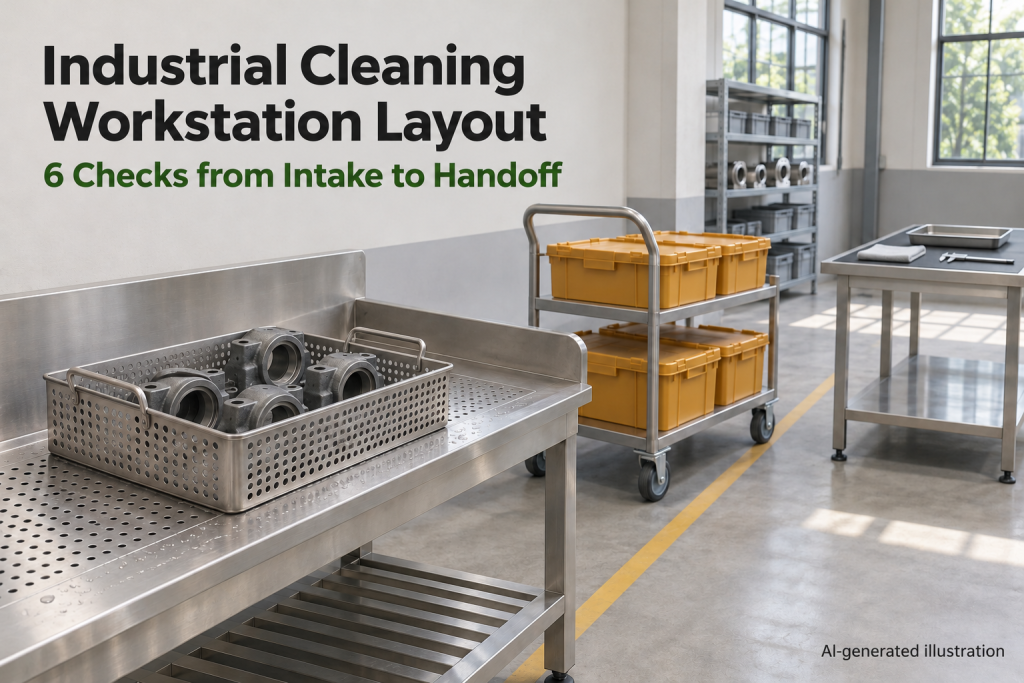
Sketch the workstation and mark intake, washing, drainage, inspection, and pickup. Then follow a batch and add any temporary drop-off points you observe. A spare tray beside the washer or an unused corner of a bench can become an unofficial staging area when the station gets busy.
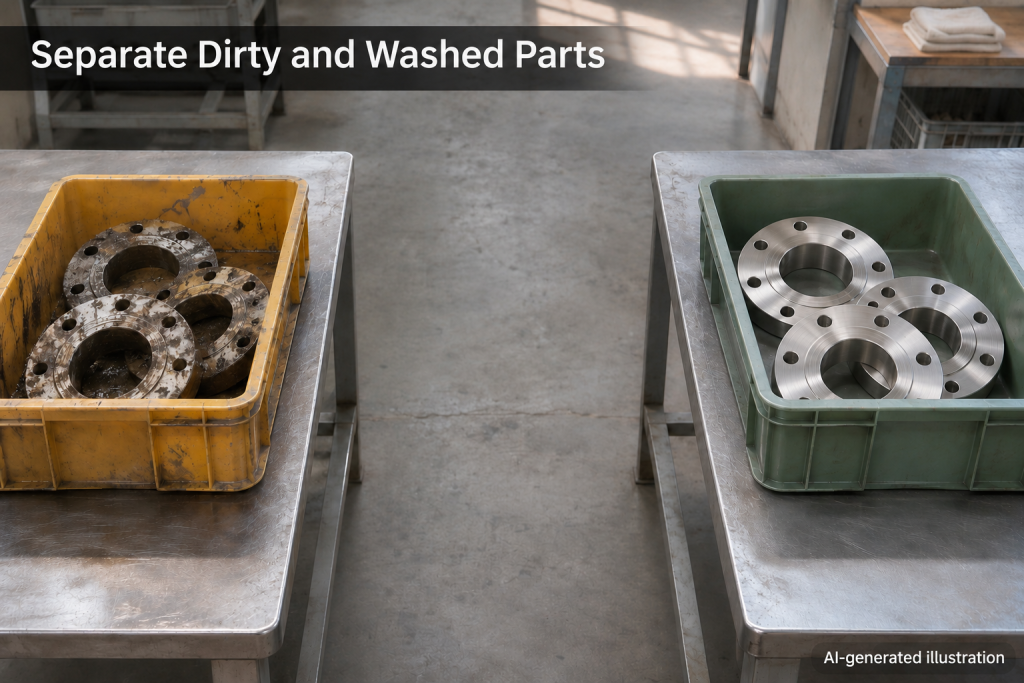
Watch where dirty and clean carts cross paths. Does the operator have to wheel washed parts back through the intake area? Does the inspector reach past incoming parts to collect a batch? If space is tight, designate one end of a bench for incoming parts and the other for washed parts. Use clearly marked containers and check whether the separation holds during a busy shift.
2. Position the Washer and Benches Around Handling Tasks
When planning an industrial cleaning workstation layout, check the space needed to load and unload the washer. A door may open fully while a cart is parked elsewhere. Once the cart is in position, there may be too little room to pull out the basket or turn toward the drainage bench.
Walk through the sequence using the cart, basket, and load size normally used on the floor. Count how many times the basket is lifted or set down. Note where operators have to reposition a cart or use a bench as a temporary transfer point. If most of the extra handling happens between the washer outlet and the drainage bench, start by testing a shorter transfer route between those two points.
3. Size the Drainage and Staging Area
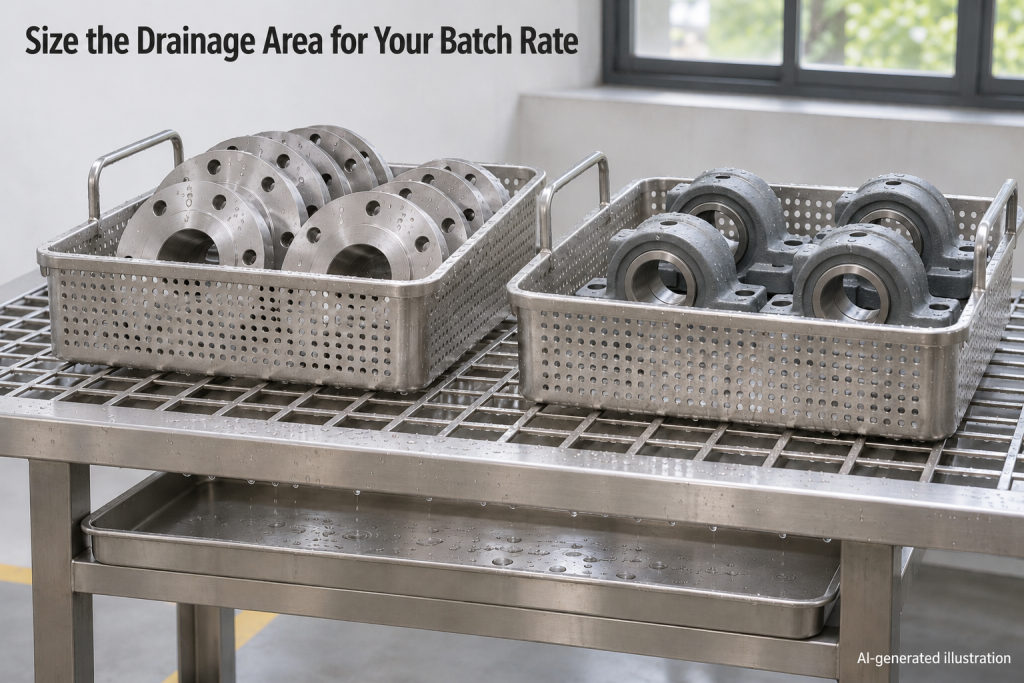
Base drainage capacity on two measurements: how often a basket leaves the washer and how long each basket occupies a drainage position. Suppose the washer releases one basket every eight minutes and each basket needs twelve minutes on the drainage bench. The second basket arrives before the first leaves, so the station needs at least two positions under those conditions. Mixed loads or slower pickup may require more space.
Check how much room a basket occupies with parts arranged in their normal drainage orientation. Housings with recesses may take up more bench area when positioned to let retained water drain. Use batch tags to show which baskets are still draining and which are ready for inspection.
4. Plan the Return Route for Trays and Fixtures
Your layout should also show where empty trays and fixtures go after unloading. When both sides of the workstation use identical containers, an empty intake tray can easily be picked up and used for washed parts during a busy period.
Mark the containers and give each set a designated return location. Keep clean trays within reach of the washer outlet. Where trays circulate between operations, include tray cleaning, inspection, and return in the work instructions. If operators routinely run out of clean trays, record when it happens and where the missing trays are waiting.
5. Build Inspection and Handoff into the Workflow
Place inspection where parts are ready to check and the next operation can collect them easily. Use three visible status labels: Awaiting Inspection, Accepted, and Awaiting Rework. Separate containers and batch tags help the next shift see which parts are ready to move.
A simple handoff record can start with the six fields below. Use the part drawing or site work instructions to determine the actual acceptance criteria.
| Field | Example entry |
|---|---|
| Batch and part type | A031, bearing housings |
| Wash completed | 10:24 |
| Drainage or drying completed | 10:36 |
| Inspection points and result | Underside and threaded holes checked. Eight parts accepted. |
| Exception or rework | Two housings had oil marks on the underside and were moved to rework. |
| Next operation and handoff time | Eight accepted parts transferred to assembly at 10:42. |
If the next operator often has to ask whether a batch has been inspected, start by making its status visible at the pickup point. Then check whether the time spent waiting for confirmation falls.
6. Validate the Industrial Cleaning Workstation Layout With Real Batches
Record several consecutive batches under the current layout, then change one condition at a time. For example, move the clean trays closer to the washer outlet and count how often operators still have to walk back for an empty tray. Test additional drainage space separately so you can see which change reduces waiting.
Track three measures across comparable batches:
- Elapsed time from intake to handoff. This shows when accepted parts reach the next operation.
- Transfers per basket and waiting time at the washer outlet. These reveal extra handling and queues.
- Number and location of parts contaminated again after washing. Repeated marks in the same area can help trace the problem to a tray, support, or staging surface.
When mapping the workstation, show how parts move and how each station communicates batch status. Lean Enterprise Institute’s guide to value stream mapping
Frequently Asked Questions
How can a small workstation keep dirty and clean parts separate?
Start with marked containers and designated landing points. A shared bench can have an intake end and an outlet end. During a busy period, check whether clean parts still have a dedicated place to land and whether operators ever reach for an incoming tray to hold a finished batch.
Should we buy a faster washer if parts keep piling up?
First check where the queue forms. If parts are waiting before washing, time loading, the wash cycle, unloading, and any wait for an empty space. If washed parts are already backing up at the outlet, check drainage capacity, inspection availability, and pickup frequency.
When should we choose the cleaning equipment?
Define representative parts, typical load size, required throughput, and site conditions before comparing equipment. During a trial, time the batch through inspection and handoff as well as the wash cycle. Explore industrial cleaning equipment and applications
After the first layout change, run another set of comparable batches with the same part type and load size. If total handoff time falls but uninspected parts begin to accumulate, record when the inspection queue forms and how many baskets the station can handle during that period.