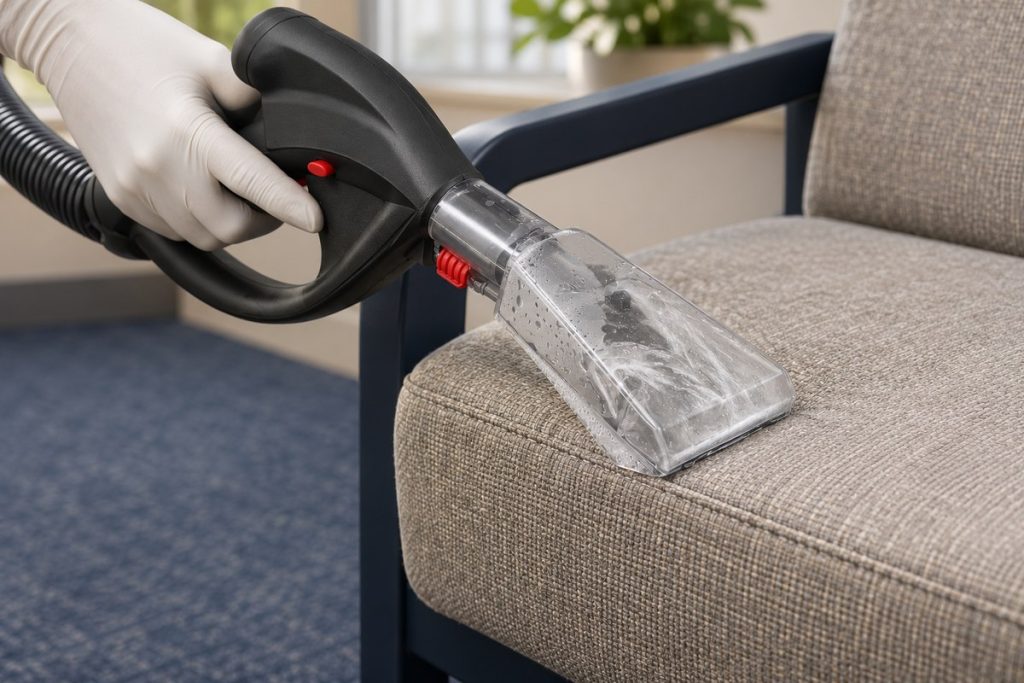
The right commercial upholstery cleaning machine depends on what your team cleans, what the fabric allows, and how many pieces you need to finish in a shift. A hotel team cleaning lobby sofas has a different job from a contractor moving between floors to clean 40 office chairs.
For commercial seating that permits water-based extraction, a spray extractor is a practical starting point. Consider a steam extraction system if your regular workload includes tasks where steam is permitted and a demonstration shows it helps loosen the soil you encounter. Compare the equipment on your own seating before choosing a configuration.
1. Check the upholstery care instructions
Start with the furniture or fabric manufacturer’s instructions. Two chairs can look similar and still have different requirements because of their fabric, backing, or construction. Make a list of the main seating types you service and record the approved method for each.
A cleaning code can help you choose a cleaning agent. Confirm the application method separately. For example, permission to use a water-based agent does not automatically mean the manufacturer approves machine extraction or steam on the assembled furniture. Consult the furniture instructions alongside the upholstery care and cleaning code guide.
2. Compare spray extraction and steam extraction
A conventional spray extractor applies an approved water-based cleaning solution and recovers used liquid through a vacuum tool. A steam extraction system adds steam to the available cleaning methods, with vacuum recovery for compatible tasks. Confirm which modes work with the specific hand tool you plan to use.
| Equipment type | When to consider it | What to verify |
|---|---|---|
| Spray extraction | Most of the workload is routine cleaning on seating approved for water-based extraction. | Spray control, tool fit, and recovery on cushions and edges. |
| Steam extraction | The workload includes recurring tasks where the furniture permits steam and the soil responds to it. | Which tools support steam, solution spray, and vacuum recovery, and how the operator switches between modes. |
For mixed sites, group the workload by approved cleaning method. If most chairs need routine spray extraction and only a few jobs call for steam, use that split when deciding which functions justify the purchase. For configuration examples, see the commercial spray and steam extraction equipment range.
3. Judge the hand tool on a real chair
Try the tool on a seat cushion, the front edge, and the joint between the seat and backrest. Watch how easily the operator can keep the tool mouth in contact with the fabric. A wide head can cover a flat cushion quickly, while a smaller head may be easier to control on curved armrests or narrow sections.
Check whether the operator can control spray independently of suction. This matters when an area needs another recovery pass without applying more solution. Also check whether the hose pulls against the tool when you work around the back of a chair or move from one side of a sofa to the other.
4. Size the machine for the whole route
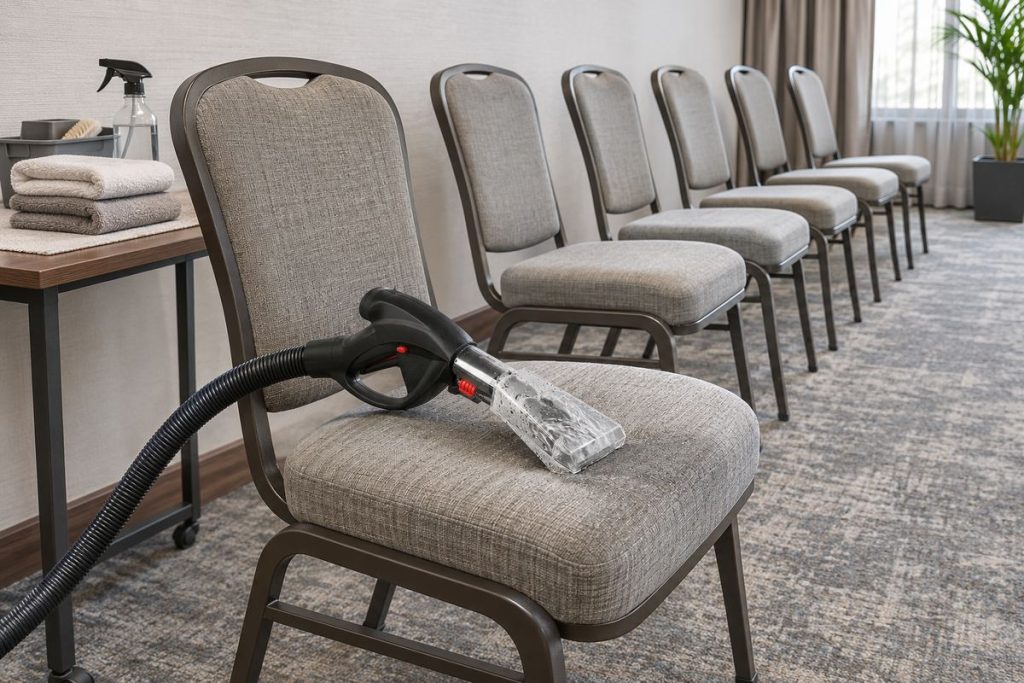
A larger tank can reduce stops on a single floor. If the job involves stairs, elevators, and several small rooms, also consider how the machine moves and where staff can refill or empty it. Check both the solution tank and the recovery tank. Either can interrupt the route.
When comparing a commercial upholstery cleaning machine with another model, test both on a small batch of similar chairs.Time the complete job, including setup, cleaning, recovery passes, and any refill or emptying. Record how much solution the team used and whether one tool handled the whole chair or the operator needed to switch. These details are more useful for staffing a shift than the time taken to clean a single flat cushion.
5. Test the commercial upholstery cleaning machine before buying
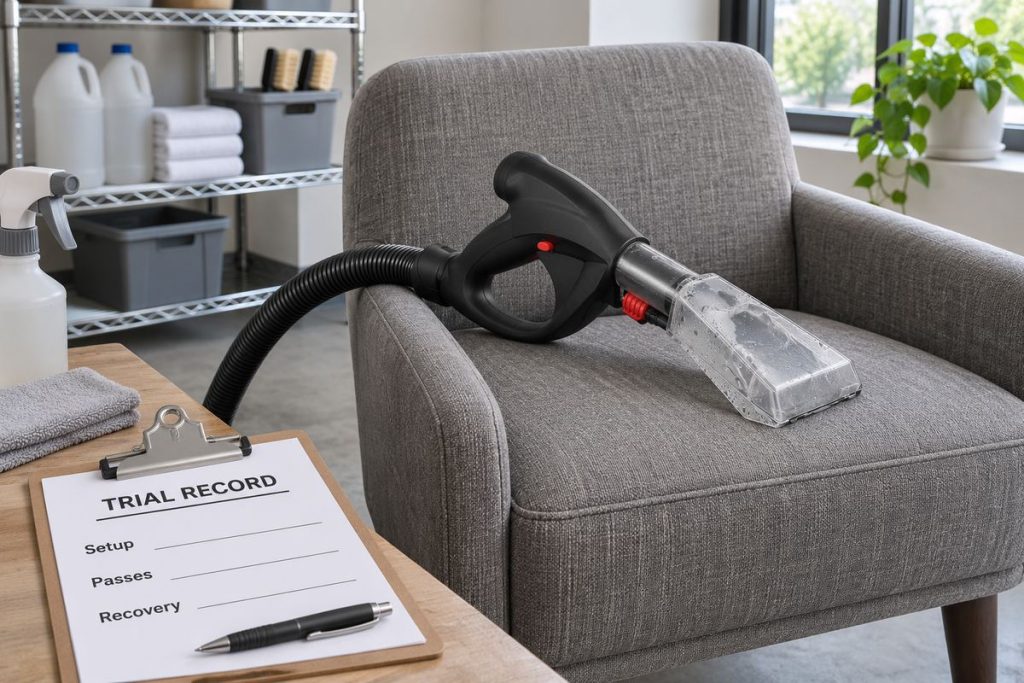
Ask each supplier to work on comparable seats using the care method approved for the furniture. Use the same inspection points and agree on what counts as an acceptable result before starting. On a dining chair, for example, check the seat center, front edge, and seam where crumbs and residue tend to collect.
Record visible soil removal, how often the operator had to repeat a pass, and the condition of seams and edges after recovery. Ask which upholstery tools, hoses, and replacement parts are included in the quoted configuration. A demo is most useful when the setup tested matches the setup your team would receive.
Frequently asked questions
Can a carpet extractor clean upholstery?
It can if the manufacturer supports upholstery use, supplies a suitable hand tool, and the furniture permits the method. Confirm that the tool and spray delivery are suitable for the smaller surfaces you need to clean.
Is a higher vacuum rating enough to compare machines?
Use it as one specification. Compare recovery with the supplied hose and upholstery tool on the same type of seating. Tool contact and how much solution the operator applies also affect what remains on the fabric.
What information do I need to request a quote for a commercial upholstery cleaning machine?
Send photos of your most common seats, their care instructions, the approximate number cleaned per shift, and any constraints on stairs, power, or refill access. Ask the supplier to quote the machine with the exact upholstery tool and hose used in the demonstration.